The Brooklyn Rail: Nancy Olnick and Giorgio Spanu with Jennifer Stockman & Joachim Pissarro
November 4, 2026
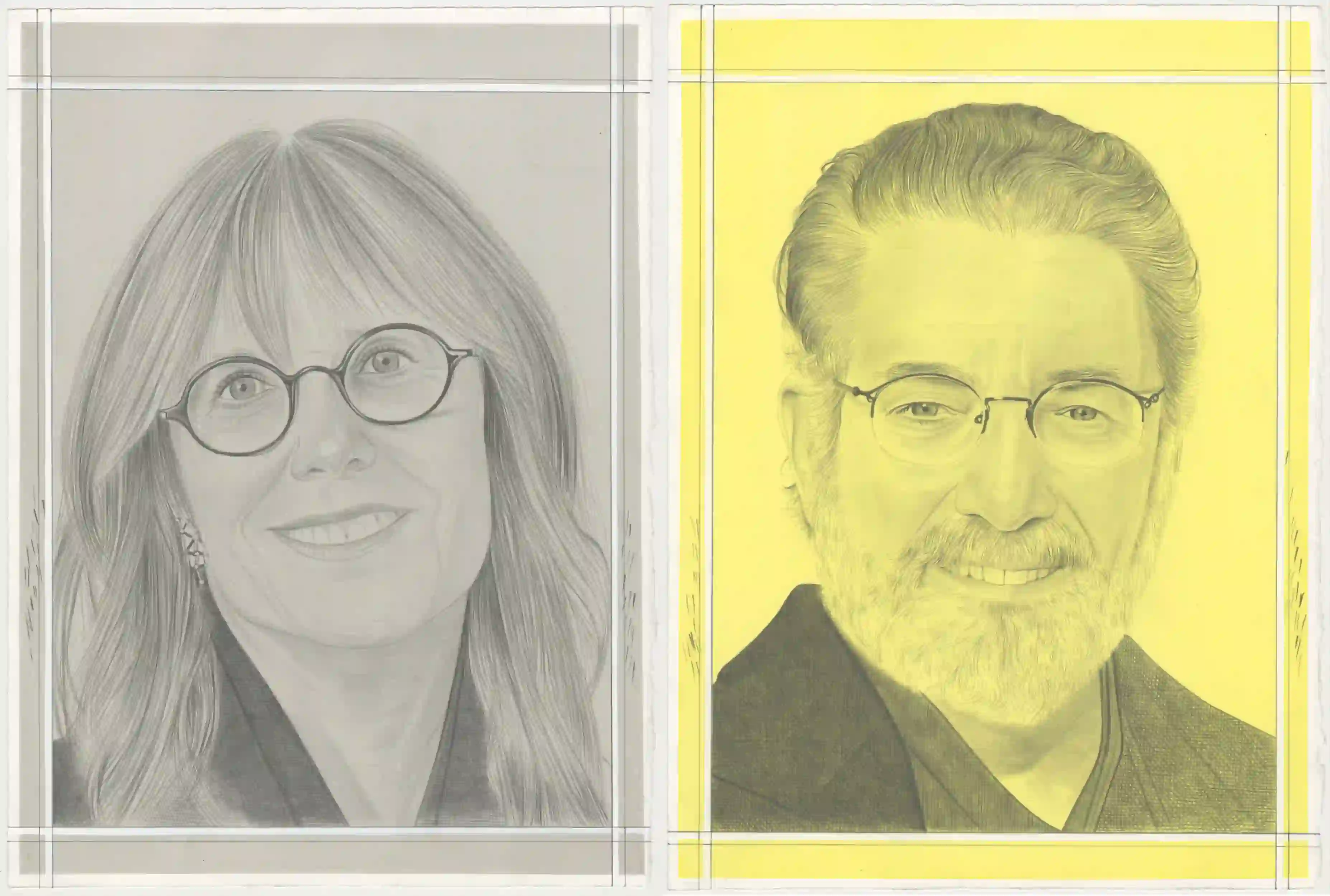
Joachim Pissarro: Nancy, Giorgio, it’s again a great pleasure for Jennifer and me to have you today as our interviewees. We’ve been conducting this series of interviews with directors and founders of major art institutions, public and private, who have had a significant impact on art and culture worldwide. I’m going to talk about something very recent. At the beginning of this summer—I’m going to show this cover. Do you recognize it?
Giorgio Spanu: Yes, I do.
Pissarro: This is the catalogue of Peter Marino’s latest exhibition at his foundation. Bob Colacello was moderating the panel and talking about Betty Parsons and Carla Accardi, and he said it’s funny that in America Betty Parsons is known to everyone who knows anything about postwar American art, but almost nobody knows Carla Accardi. He asked if anyone in the audience knew Carla Accardi, and you two lovely people raised your hands. You were the only ones. Accardi is very well known in Italy, but not in this country, and I think that speaks to your program. You both emphasize the educational and research purpose of Magazzino, and I’d like to start there, as I myself am an educator for more than thirty years and, by the way, a friend and colleague of Emily Braun, whom you know very well. Sometimes we see lists of artists in your collection, and—we’re not going to tell lies—three out of five might be unknown to us. How do you address this gap?
Spanu: This is one of the reasons the Olnick Spanu Art Program started, even before Magazzino. When Nancy and I decided to put together a collection of contemporary Italian art, we realized that living Italian artists were, most of the time, totally unknown in the United States—and I’m not even talking about Arte Povera. I’m talking about younger artists. Through the program we started in the 2000s at our property in Garrison, NY, we brought for ten years one artist every year to develop a site-specific artwork and to present their practice to the American public: Giorgio Vigna, Massimo Bartolini, Mario Airó, Domenico Bianchi, Remo Salvadori, Stefano Arienti, Bruna Esposito, Marco Bagnoli, Francesco Arena, and Paolo Canevari. What struck me at the very beginning was that most American collectors were not aware of the quality and depth of the work done by contemporary Italian artists. That is one of the reasons we started the program, and eventually Magazzino Italian Art, which initially had a specific function: presenting Arte Povera to the United States.
Read full interview