Il Giornale dell'Arte: Francesco Clemente and Massimiliano Gioni in conversation at Magazzino Italian Art
May 28, 2026
Versione in italiano
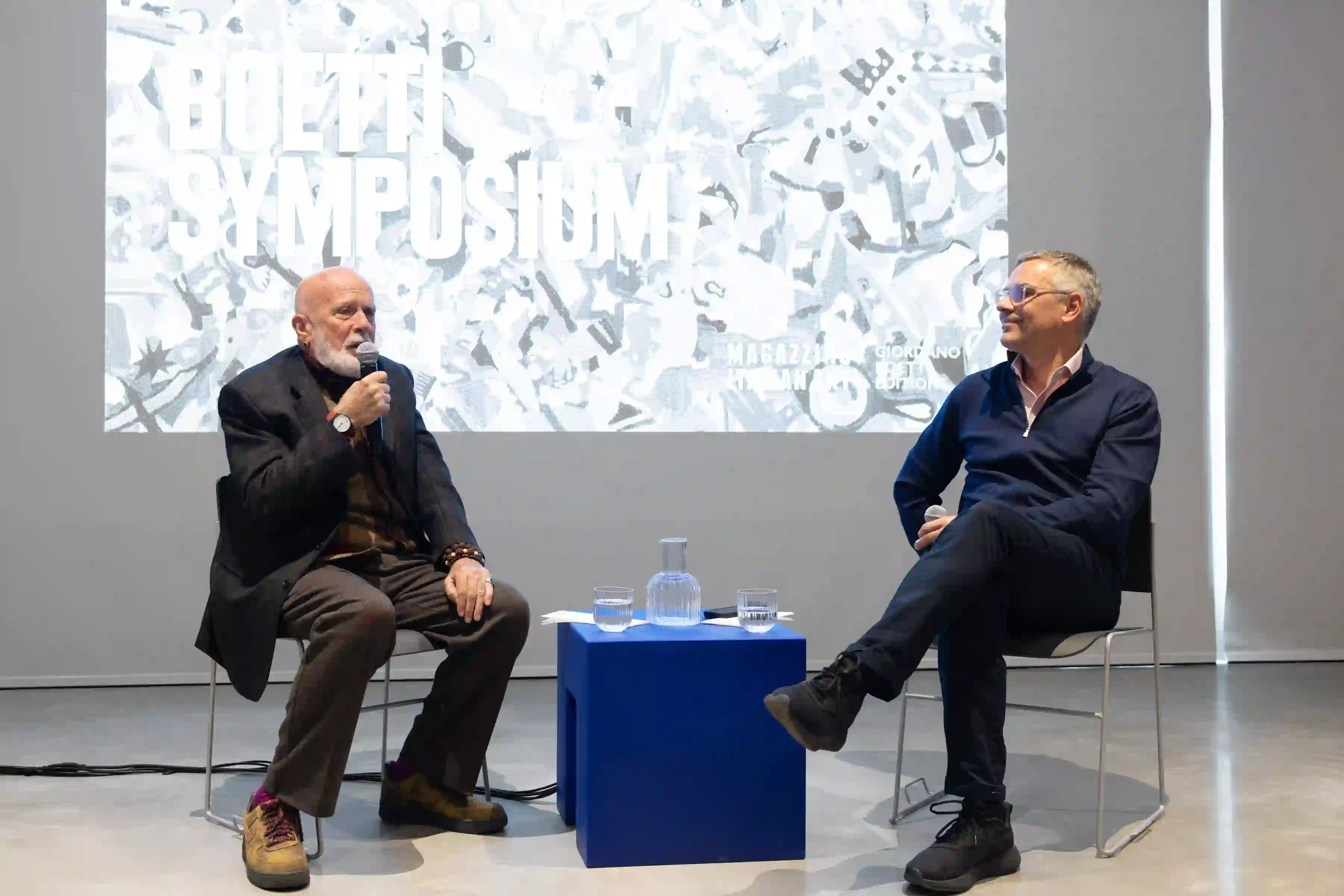
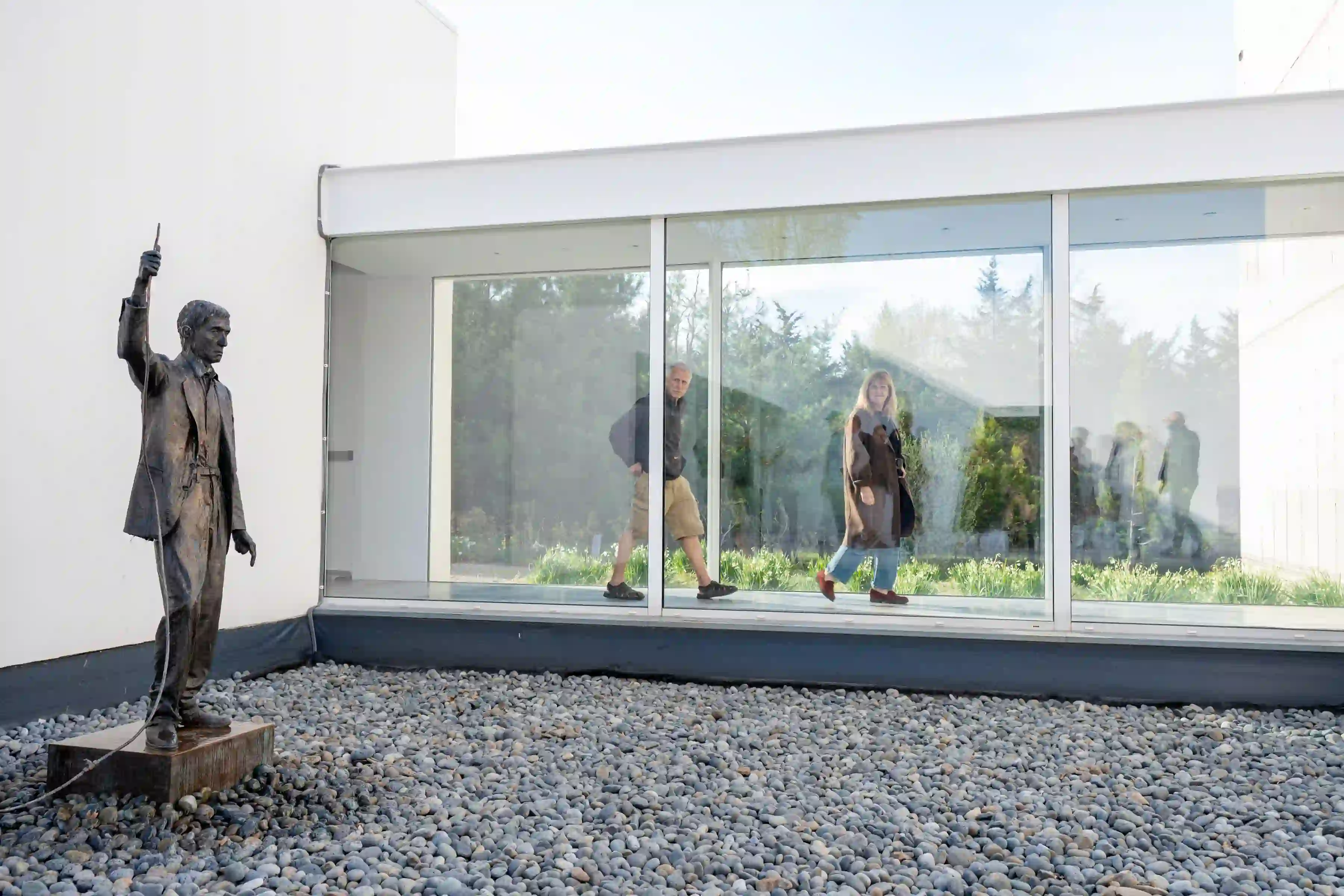
On the occasion of the opening of the exhibition Tutto Boetti: 1966–1993, on April 25 Magazzino Italian Art hosted a symposium dedicated to the artist, during which Massimiliano Gioni interviewed Francesco Clemente. Organized by Magazzino Italian Art in collaboration with the Fondazione Alighiero e Boetti and coordinated by Luciana Fabbri, the symposium reflected on how Boetti’s work can illuminate the present, retracing his artistic legacy through the voices of contemporary artists including Francesco Clemente, Stefano Arienti, and Paola Pivi.
The event opened with a screening of Alighiero Boetti. Ritratti di fine millennio (1986) by Federico Tiezzi and Sandro Lombardi: a candid video interview filmed in the artist’s Roman studio, in an atmosphere of intimacy and complicity.
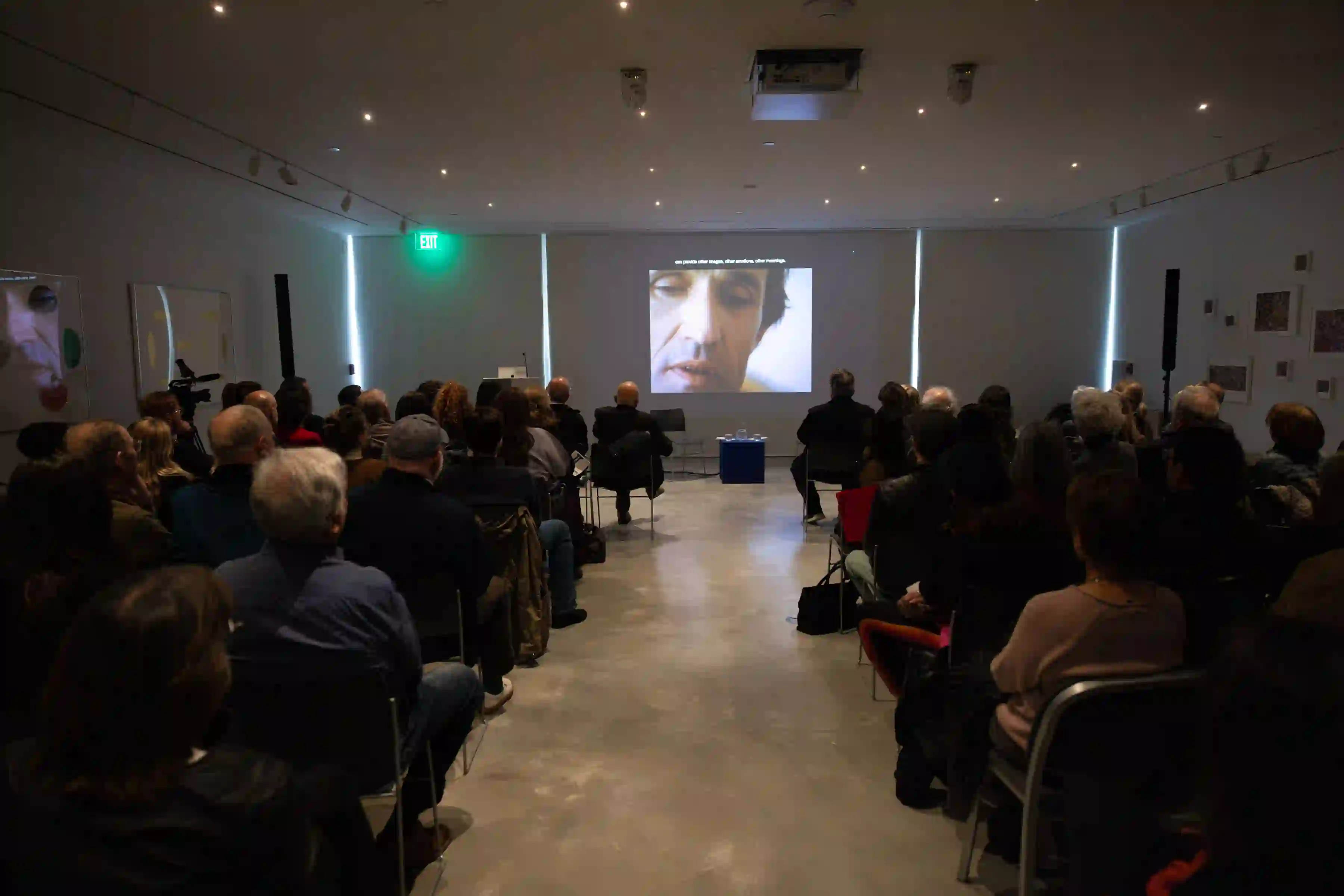
Below is the conversation between Massimiliano Gioni and Francesco Clemente.
Massimiliano Gioni (MG)
I thought about Alighiero Boetti's "Happy Coincidences" and remembered that Sandro Lombardi and Federico Tiezzi, the film's authors, formed the theater group Magazzini Criminali. From Magazzini Criminali to Magazzino Italian Art, then. And, even more importantly, it's truly a happy coincidence for me to be here talking to Francesco. I also want to repay a debt, both intellectual and emotional, to him. He doesn't know it, but years ago I owned a little book by Emilio Mazzoli Editore. I don't remember the title, but I know it was black with a red ribbon. Inside was an extraordinary drawing of his illustrating proverbs. One of them was “Pearls before Swine” an expression used to describe the giving of precious gifts to those who are unable to receive them properly.
Francesco Clemente (FC)
That's not the case tonight.
Massimiliano Gioni (MG)
No, but it would, I think, be something Boetti would have appreciated: casting pearls before swine. That book remains one of my most precious possessions; it inspired me to become a curator and make a living from art. I'd like to start by asking you how and when you met Alighiero Boetti.
FC
I met Boetti through a mutual friend, Mariangela, who was a fortune teller in Rome. She read cards for Fellini, Antonioni, all the greats. She designed her own deck, which I also did many years later. She took me to Boetti's house, and there was already a contrast because downstairs was the studio, where all the madness took shape, while the house upstairs was very, let's say, bourgeois, very welcoming, with those two delightful children, Agata and Matteo. And I think external forces brought us together. Being an artist at that time wasn't a profession, nor even a vocation: it was a way of living in one's own body in a certain exemplary manner. This is a notion that I believe has remained from that time. Back then, you weren't making art: you were your art, even when you weren't performing. Here now, we're in a sort of temple of Arte Povera (thank God there is one), but my training with the Arte Povera artists was very difficult. In particular, I remember a group show at the Galleria L'Attico in Rome, which featured some exemplary and memorable exhibitions by Jannis Kounellis and Pino Pascali, above all, and other important artists of the time. In that show, there were some newcomers: Alighiero from Turin, me from Naples, Ontani from Bologna. In Italy, it's not just the artists who are factious: put three Italians in a room and they won't agree on anything. So, somehow, the disdain the Roman artists felt for Boetti, me, and Ontani was such that it pushed us to unite, just to survive. For the exhibition titled “24 Hours” the gallery remained open day and night, twenty-four hours a day, for an entire week. So there were plenty of opportunities to get together and face huge, terrifying monsters... You may have noticed how Alighiero constantly spoke about lightness in this video. Boetti, Ontani, and I could still laugh and consider ourselves serious artists. The others, however, couldn't laugh. They were dead serious.
MG
You mentioned lightness. I'll tell you that one of the reasons I'm so happy to be here is that I've never met Alighiero Boetti, but when I think of Boetti, I think of joy and happiness. However, perhaps we'll get there. I also think of “Avere fame di vento"” having it to the point where, as he would say, it almost becomes a kind of tragedy: a desire to do so much that it could consume you. But let's start with joy. I think you, Boetti, and then Ontani, emerged at a crucial moment, when a certain gloominess of Arte Povera and the gloom of the Years of Lead were disappearing. Clemente, Boetti, and Ontani, or Achille Bonito Oliva with his writings, somehow introduced a new joy to making art and being together. Do you recognize yourself in this description?
FC
I don't know if I'd call it joy, certainly seduction. And Alighiero Boetti was very aware of this; it was part of his program. The fact that, fundamentally, his way of making art followed very rigid protocols could, if he wanted, have produced very dry and unattractive results. But he didn't want that. He believed that every artist should aspire both to an esoteric practice for the few, such that only a few people really knew what was happening, and not a wider audience. However he wanted to seduce a wider audience as well. He was the one who told me this; it was truly among his deepest thoughts. And so one might think, for example, of an affinity with certain ideas. Many, many years later—I'll never forget it—I had an exhibition in New York and two visitors approached me and said, “We hope you don't take offense, but we think your exhibitions are very beautiful.” I've always thought of beauty as something difficult. Alighiero also thought that beauty was difficult and that there was a cruelty in beauty. Alighiero was interested in Afghanistan as a cruel place. And he was very cruel to himself. Joy, of course, grows from that soil, but it's not peaceful soil.
MG
You mentioned Afghanistan. Do you remember when you went there with him? There's a beautiful photo of the two of you. How did the journey begin? After how many years of knowing him did you set out together?
FC
It was, I think, 1974. Boetti had already been many times in Afghanistan. He had a hotel in Kabul, the One Hotel, something of a legend. You have to imagine that the world back then was a relatively peaceful place and that all those societies were still rural. When you arrived in those places, in those societies, people would take you by the hand, lead you into their homes, and feed you. That was the reality. Many traveled overland from Europe to India, and the One Hotel was legendary because it was the only place along the route where you could eat a fruit salad without catching cholera. The fruit from Afghanistan was the best and sweetest because it grew in such harsh conditions. Once again, this is Boetti: the harsh conditions, the sweet fruit.
MG
Did you drive alone to Kabul?
FC
No. First we became friends, then I guess he asked me if I wanted to go to Afghanistan with him. The hotel was gone, but he kept going there anyway to see his assistants. And I had some kind of heart problem, I had to escape from someone, and I left with Alighiero. We went to Afghanistan and there… Do you want to know what happened next?
MG
Of course!
FC
We decided to hire a driver and cross Afghanistan from Kabul to Kandahar along the so-called "Ring Road," the road that crosses the country. (Kabul, Wardak, Ghazni, Qalat, Kandahar, Delaram, Herat, Qala e Naw, Maymana, Andkhoy, Sheberghan, Mazar-i-Sharif, Puli Khumri, Charikar, Kabul.
—
Editor's note
The driver we found was fantastic; he was also a painter and had restored all the frescoes on the ceiling of the niche of the enormous Buddha, which was literally destroyed by the Taliban (one of the two Bamiyan Buddhas blown up in 2001
—
Editor's note
I don't know if you remember, but in Afghanistan, there were some monumental frescoes among the oldest in human history. There are some in China, in the Mogao Caves, and others in Afghanistan, which we saw. And our driver was the man who had restored those frescoes. He just told us, “I'd take you, but there's a good chance that, halfway there, someone will stop the car, unfold a large sheet, and lay it out in front of the car. They'll make you take off all your clothes, put them in the sheet, and you'll have to deposit all your belongings there. Then, if they're kind, they'll let you walk naked toward the mountains. If they're not kind, you'll die.” So we decided to take another route. But we went anyway, like adventurers, on our own, because we took a truck to the Pamirs. Every time he talked about Afghanistan, Alighiero also made an hand gesture, with four fingers bent and the thumb out. “This is the map of Afghanistan” he said. And, you see, the thumb is the part in the bush, between the mountains of China, Russia, and Pakistan. That's where Osama bin Laden hid, because it's the wildest and most remote part. And we went there.
MG
You found your East in India. How did this search connect to the example of Alighiero Boetti? Or was it not connected at all? Had you been to India before?
FC
I had already been to India and was very happy to have seen Afghanistan, but I didn't think it was the place for me. You could sense that trouble was coming; there was a sort of tension in the air. Visually, it was like being inside an Italian painting, like...
MG
Piero della Francesca?
FC
Yes. It was simply an extraordinary sight. And, in the end, most of us found ourselves in Mazar-i-Sharif playing chess with the Russians who were building a road. We didn't know why they were building it; we found out a few years later, when they entered with the Russian army. But we lived an incredible time in the Pamirs, because we stopped in a place that no longer exists; it was destroyed by the Russians, and it was the only crossing point in the entire area between Russia, China, Pakistan, and Afghanistan, where nomadic groups crossed the great river. And so we spent weeks sitting on that bridge, watching the caravans returning with all sorts of wonderful things. It was a very visually powerful experience. Emotionally, however, a voice told me: “This is not my place. Everyone here is completely crazy.” There were animal fights, bird fights, dog fights, all kinds of fights. It was as if there was a constant fight everywhere. But with great dignity. So elegant. Divine.
MG
Back in Rome, how was your friendship? Did you go to his studio? To his house?
FC
I went every day. Another thing we should say after seeing the film above is that this wasn't Alighiero smoking and being so ecstatically present for the interview. For me, he was like that 24/7.
MG
Actually, I was thinking about his eloquence. Did he read a lot?
FC
Anne-Marie Sauzeau, Boetti's wife, read a lot. She was French, a woman of letters, very aware. At that time, there was extraordinary ferment in France, with new philosophers like Foucault, and then Deleuze, Guattari. Alighiero was therefore very aware of this whole movement, but he had taken from it…
MG
The summarized versions?
FC
Anne-Marie taught me those ideas too. Much of his thinking came from her, and she certainly had a great influence on Alighiero's vision.
MG
Did you work together in his studio? Or did you already have your own studio at that point?
FC
No, you know, having a studio was forbidden, painting was forbidden, touching anything with your hands was forbidden. There were so many things you weren't supposed to do, so much so that when I started painting—which I didn't do right away, because I first worked with photography—I photographed my drawings, then commissioned paintings from other painters. I followed what you might call “the Boetti protocol.” But even that wasn't rigorous enough. And then, when my work took shape and became more vocal, we had a big argument.
(MG)
When did it happen?
FC
When I showed my large fresco at the Venice Biennale (1980) and then went to New York, where I held several exhibitions. Alighiero Boetti wasn't happy with me, and at that moment it was very painful for me.
MG
Without wanting to oversimplify, do you think it was jealousy of success or something else?
FC
Everyone is jealous and no one is jealous. And Boetti was too intelligent to be jealous. It wasn't about that. It was the asymmetry: I was blossoming and he was in the most difficult moment of his life, he was experiencing many disappointments.
MG
Given our current understanding of Boetti, I think it's difficult to understand that there was a time when he was in every gallery at Arte Fiera in Bologna, with too many small works... Or at least, that was my perception growing up. There was a time when some thought he was compromising with the market, or that he was too available. But today, in retrospect, we would see him as he himself said: a genius of distribution...
FC
It wasn't that. He was a true artist who truly put himself on the line, every day of the week, and that can come at a price. When I met him—this is something I've never said to myself until now—I had the feeling that his best work was already behind him. I sensed he had such anxiety, because he had invented so many things with such intensity, one thing after another... And by the time I met him, he was starting to take a more manual approach, making choices that were somehow, I won't say messy...
MG
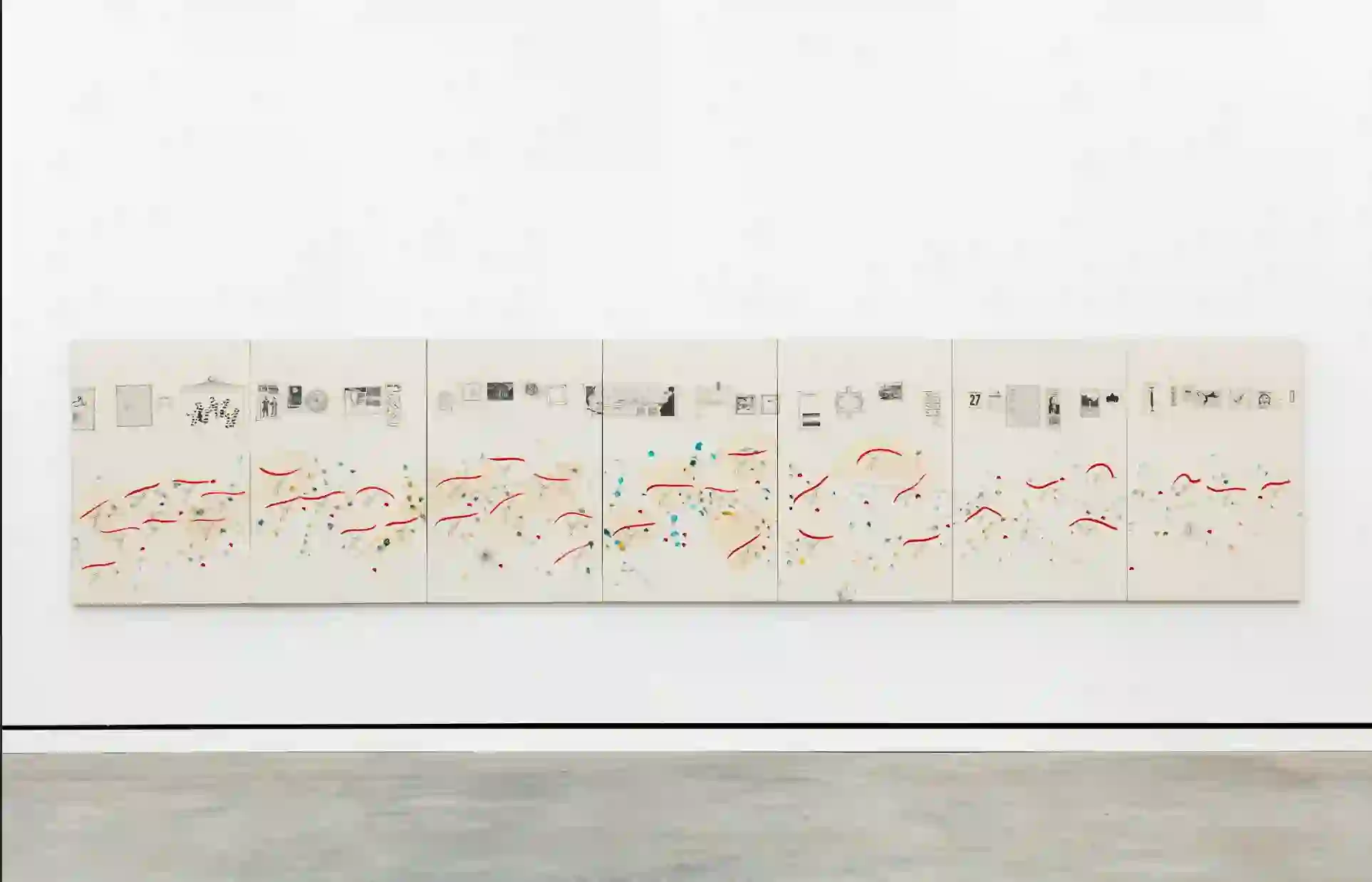
Are you referring to the work with monkeys? It's incredible.
FC
Yes. There was something I felt, as a young artist. And that was that this man was so tormented because he had reached the end of his life and didn't know what else to do. Because everything he had done up to that point had been so well received. I sensed a crisis, somehow undeclared. But the other thing, and again you can see it in this film, is that some artists are as great as their work, and other artists are even greater than their work. And he really was. What do I mean by “great”? How many people do we know who think for themselves? I don't know any. He was one of those people. You can see it a bit in the interview, when he talks about pink sand and white sand. Did you notice? How many lofty desires are there in that story about pink and white sand? I thought, “My God, this is entropy.”
MG
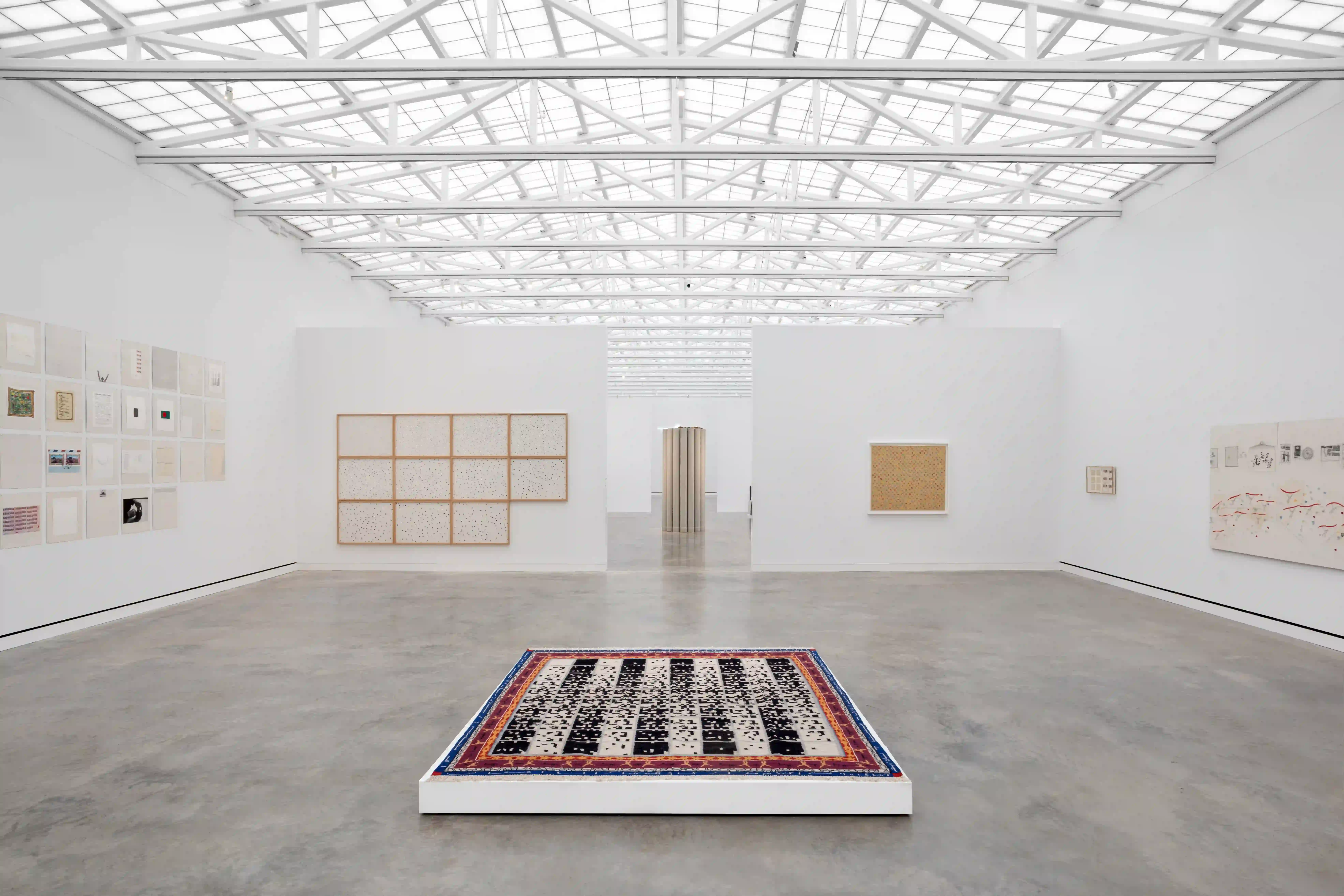
It's interesting that you thought the best was behind him. Then so much more came, something shocking and beautiful like “Alternating from One to One Hundred and Vice Versa” or even the “Self-Portrait” exhibited here at Magazzino. What was he like with other young artists?
FC
In many cases, he was very generous and very involved, and he was very perceptive towards artists who weren't necessarily doing anything similar to what he was doing. Before me, he had befriended Salvo and introduced him to the world of galleries. Then came me, and then after me, there was Tirelli and others...
MG
Did you do any work together?
FC
No, because it took me a long time to realize that I actually “had the knack."” And then I didn't think I could really paint. I wanted to be an artist; I never wanted to be a painter. And now, several years later, you know what? I can paint.
MG
For you, it wasn't just about discovering that you could paint, but also about being allowed to paint. In your relationship with Boetti, did you see him trying to break free from systems and rules, or even, in a certain sense, from himself? How did he experience repetition?
FC
The big lesson is that, if you want, one of the main things you need to achieve something is to establish protocols, to ensure that these protocols allow things to be done. And if you're a “painter's painter,” like I am, you put the protocol in place. Then, when it comes to making the painting, you simply throw the protocols to the dogs, you know? Bye-bye. And I don't want to leave the story of our breakup hanging because what happened was that, after a period of not seeing or speaking to each other, he got sick. Mariangela, the fortune teller who had introduced us, called me in New York and said, “Call Alighiero Boetti, he'd like to see you.” So I went to Rome, but at that point, Boetti, in my soul, was like wine: I knew how to take him, I knew how to drink him. After all his excesses, he told me, “Everything's fine.” And we had a wonderful time. The first thing we did when I got back was go to Campo de' Fiori and buy what today would be 2,000 euros worth of broom, the yellow flowers, and we walked around with that enormous thing. It was all a game of excess, really.
MG
I don't know if you want to talk about what kind of excess, but, from your point of view, how did it translate into his art?
FC
Are you asking me about drugs? There were a lot of drugs involved. I don't think they have anything to do with this, though.
MG
Do you think his desire to do more was also fueled by drugs?
FC
There's no connection between drugs and work, zero.
MG
So, staying on art, what was this desire to have different variations of everything, which in a certain sense seems so anti-dogmatic compared to what everyone was taught, which was to make variations. He wasn't just into excess, but also loved exceptions to the rules.
FC
Everything about him didn't really fit the mold of Arte Povera or his contemporaries. Alighiero Boetti wanted to go to Afghanistan: who else does that? And then, in those years, when you did that kind of thing, you were risking your life. It wasn't like saying, “Let's go take some selfies”; it was like, “Do I want to get killed or not?” This is just to give you the general picture. And then, again, as we've seen here, it's something that has completely disappeared today. I think today's artist's attitude is more: “I give myself a task and I solve it.” End of story. Alighiero Boetti really wanted to change the world. I have to tell a story that I think illustrates this. At a certain point, Boetti had a fantastic idea, the project of creating a history book that could be used in every school in the world. So he began to talk about it with a serious historian, I think it was Ernesto Galli della Loggia, but I'm not sure; and the historian told him: “Boetti, this can't be done."” And he replied: “It's because you think like a historian, I think like an artist, and I throw myself into the void.” This is one of the things that, like a talisman and a guide, still moves me: the image of the “Diver” painted on a tomb found in Paestum. This diver is the image of death and life. For him, it was very, very important, and it sometimes reappears in his stencils.
MG
Have you ever painted Boetti?
FC
No. I could have, at the beginning, when I started making frescoes and painted some portraits. Then there was the long period when we didn't see each other, when I was developing my painting further.
MG
You also have the fortune, or the responsibility, of having met and become friends with Andy Warhol. Sometimes, because of this idea of delegated production, because of the ability to distribute, a parallel is drawn between Warhol and Alighiero Boetti. First of all, did they ever meet?
FC
The Arte Povera artists looked very intensely to America, and I always thought that, in a certain sense, was a limitation, because many of the works they created were responses to what had already been done here. Including Alighiero, when he created that checkerboard where a sheet of paper enters and exits the individual squares. For him, that was the way to give a human dynamic to a work by Carl Andre. They all thought a lot about American art, and American art in the 1970s wasn't exactly a party, so to speak. All that minimalism was very dogmatic, not at all postmodernist: it was full- blown, dogmatic, harsh, stingy modernism... I'm exaggerating, I'm an artist.
MG
The famous New York gallerist Jeffrey Deitch—who started out as an intern at the John Weber Gallery—told me that all the gallery's artists met there once a week to take care of their correspondence. So in the waiting room you had Carl Andre and all the giants of minimalism and conceptual art. And Deitch said they were all very cumbersome, almost frightening personalities.
FC
Boetti was exhibiting with that gallery. The problem was that no one really understood what he was doing at the time, not even in the context of Arte Povera, because, once again, it was too seductive and all those references to a broader universe weren't considered significant.
MG
Do you know if he ever met Andy Warhol? Do you think there was any correspondence between them?
FC
No. The first time I visited him in his bourgeois apartment, on the wall there was a poster of Saul Steinberg's drawing, with the view from the window onto the West Side Highway, where you can see the Hudson River. Then you see the Midwest, the Pacific Ocean, and Japan. It surprised me a lot, because Alighiero, again, wasn't really
interested in the hand. Years later I spent time with Saul Steinberg, and he and Boetti were like the same person, in their lively intelligence, that of someone who never looks at things the way someone else has looked at them, but who looks at them as if seeing them for the first time. It's a very similar type of intelligence.
MG
I don't remember whether it was in this Tiezzi and Lombardi interview or in another one that Boetti talks about the concept of the double. And he said something about how, essentially, with art you live two lives simultaneously, because you look at the world from multiple perspectives. There are also many doubles in your work. In fact, you have so many self-portraits, in which there is both you and not you, or one of your self-portraits is you with your mouth open and inside there's another you. What is your relationship with the double, and how is it different from Boetti's? Or do you have something to say about your relationship with the double and his ideas about this multiplication of perspectives and points of view, and this possibility of ultimately seeing
everything twice, as with Borges? Is it like “bringing the world back into the world”?
FC
I also have a certain severity, but it's not the same. There's a reason why Alighiero Boetti was fascinated by Afghanistan. He was fascinated by the severity of Islam, by the Sufis. I also always start with ideas, but then you can't be a good painter if you don't throw away all your ideas and accept the fact that you know nothing.
MG
What's the most important lesson he taught you?
FC
When I met him, I was 23; he was 35, and he was already an established artist, while I was nothing, nobody. He taught me to think like an artist. But not only that, he brought the first gallerist to my studio, introduced me to the first great curator, shared everything he had with me. He taught me that there must be a reason for everything. You can't just say, “Oh, I feel this way, as an artist.” No. You have to have a reason, something to say. And you have to have your own strategy for saying it. You have to find your own perspective, your place in the world. He taught me to find that place, where to look from.
MG
What do you think he saw in you?
FC
I don't know. He just thought I was crazy. You can't imagine how crazy I still am.
Francesco Clemente will be at the Triennale di Milano from May 29th to September 6th, 2026 with the exhibition “In Between” curated by Francesca Pietropaolo with Robert Storr. Almost simultaneously, SMAC Venice, San Marco Art Centre, is hosting a large retrospective on the work of Alighiero Boetti until November 22nd, 2026, curated by Elena Geuna and supported by Ben Brown Fine Arts; inaugurated concurrently with BIENNALE ARTE 2026—61st International Art Exhibition.