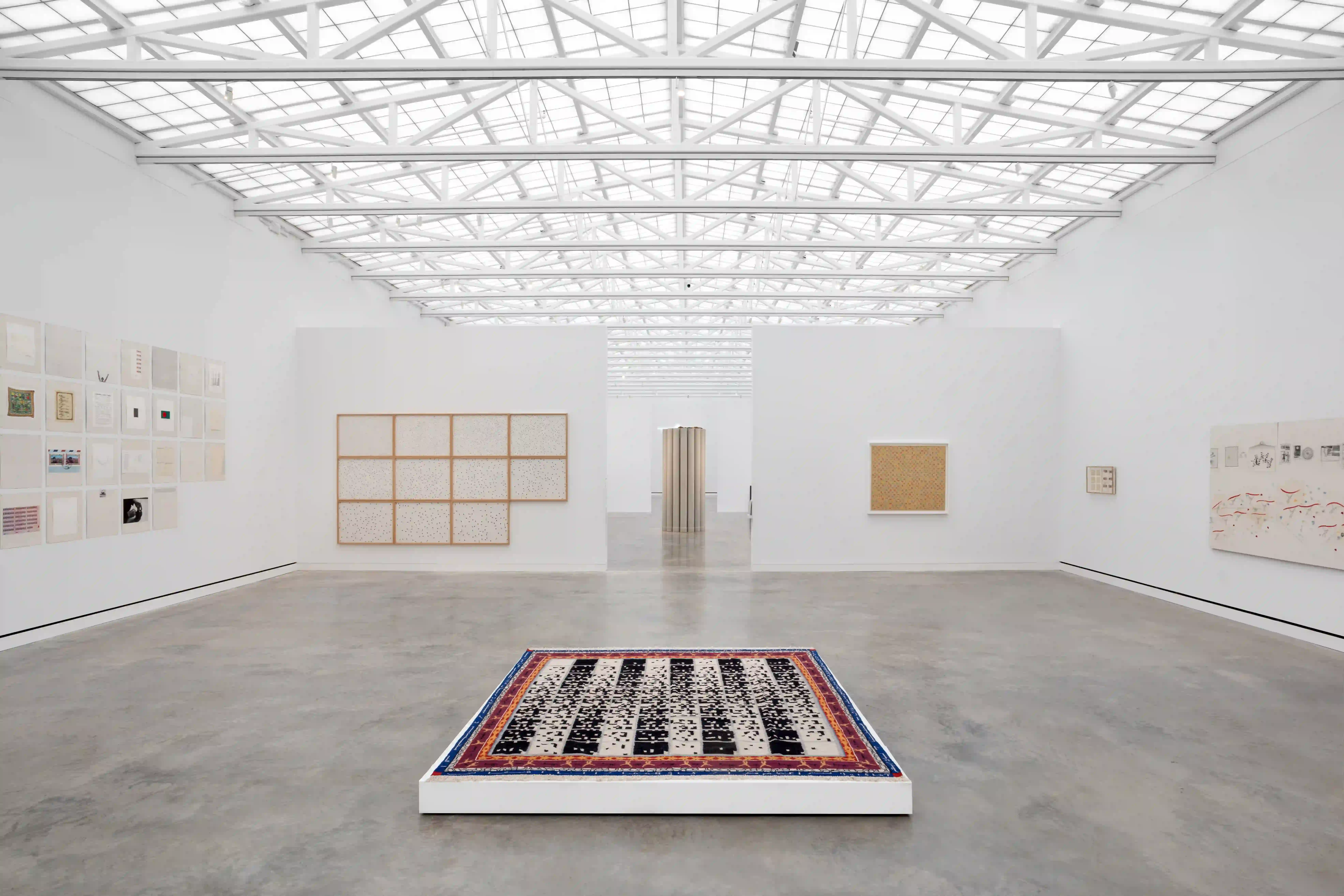
Tutto Boetti 1966–1993 offers a multifaceted view of Boetti’s artistic research, tracing its development from early experiments in Turin in the 1960s to the large-scale works of his maturity. The exhibition highlights the remarkable coherence of an artist who built his practice around systems, collaboration, and openness to the world, as well as his fundamental role in shaping many of the key themes of Arte Povera.
Presenting approximately 30 works by Alighiero Boetti, beginning with a core group from the museum’s permanent collection, including a selection of early works from the 1960s, alongside loans from the Boetti estate and an important private collection.
The exhibition will be complemented by a symposium on April 25, 2026, featuring leading curators, critics, and artists invited to reflect on Boetti’s legacy, affirming his central role as one of most influential figures in the history of contemporary art. The symposium is organized in collaboration with the Fondazione Alighiero e Boetti in Rome.
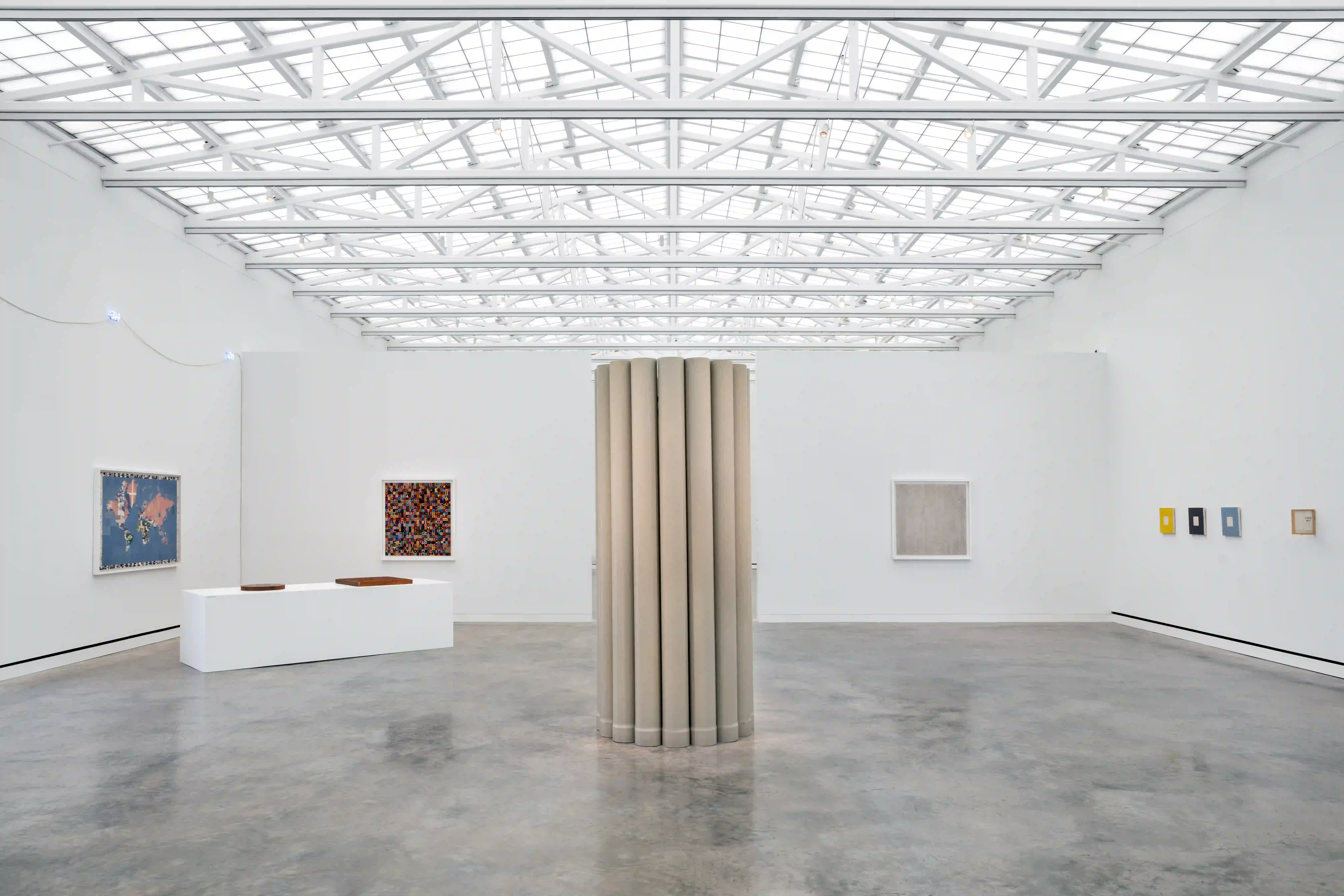
The exhibition begins with one of the founding groupings from Magazzino’s collection: a selection of artworks Boetti presented at his first solo exhibition at Christian Stein Gallery in Turin in 1967. Right at the entrance, visitors encounter the original invitation card Boetti created for his debut show, where he affixed samples of the materials he had used to make the works (cork, electric wire, eternit, PVC, metal, plexiglass). The artist embraced the industrials materials emerging from the industrialization of Italian northern cities in the postwar period, which he sourced directly from the hardware stores. Among this first group of works—Triplo metro, Asta di misurazione, Mancorrente a squadra, Pannello luminoso, and Clino—offers privileged insight into the conceptual and aesthetic concerns that animated the artist’s early practice.
This early phase is followed by a series of works representative of Boetti’s Roman years, when his research expanded in multiple directions, increasingly focusing on themes of duality, authorship, and delegated execution. Exemplary of this phase is the art work Da mille a mille (1975), composed of eleven sheets of graph paper on which the artist’s assistants were free to color and combine the squares according to their own choices. Also included in this section is Mappa from 1983, part of the celebrated series begun after Boetti’s first trip to Afghanistan in 1971. Struck by the textile craftsmanship of Afghan women, the artist initiated a long-term collaboration, entrusting the production of these embroidered works to their extraordinary technical skill.
Nancy Olnick and Giorgio Spanu, co-founders of Magazzino Italian Art, state: “The historic nucleus of works by Alighiero Boetti presented here, brought together thanks to the important relationship we have developed over the years with Gianfranco Benedetti from Galleria Christian Stein, now allows for a full critical reassessment of a foundational moment in the artist’s career and in the history of Arte Povera. We are also very pleased with the collaboration of the Fondazione Alighiero e Boetti for the symposium and of all those who made significant loans possible, contributing in a substantial way to the completeness of the exhibition project.”
The exhibition will be accompanied by a catalogue including detailed entries for each work, conceived as a reference point for the study of these works and as a working tool for future scholars.