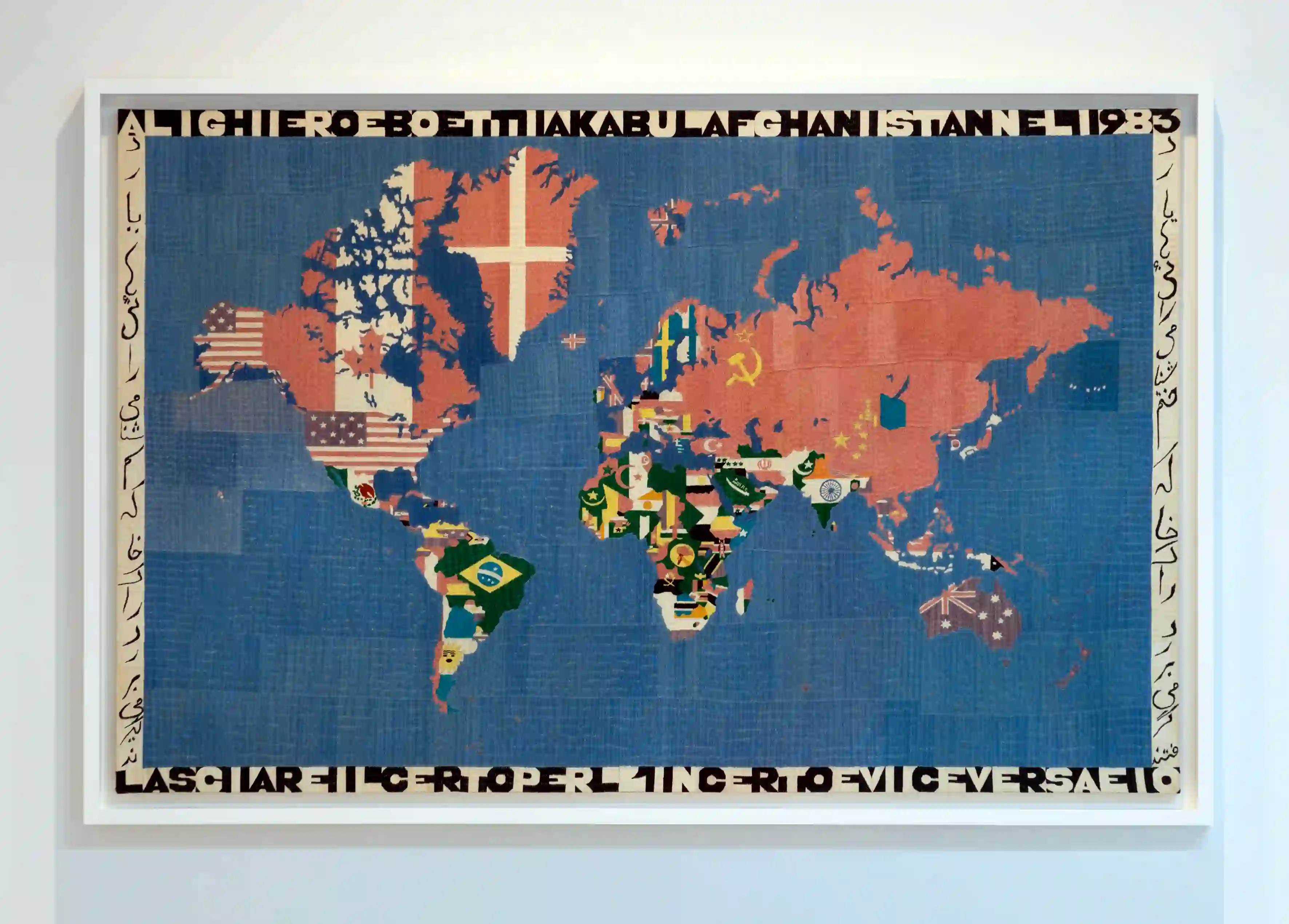
Magazzino Italian Art presented a four-part lecture series “Una visione globale”: Arte Povera’s Worlds curated by 2019-20 Magazzino Scholar-in-Residence Tenley Bick.
In this second lecture of the series, Valérie Da Costa, Senior Lecturer in Contemporary Art History at the University of Strasbourg, addresses the concept of “the Mediterranean” in the practice of Italian artist Pino Pascali. Pascali’s work across a range of materials—including water, mud, fake fur, and steel wool—led to a reconceptualization of sculpture as a medium, as well as the exhibition as a space. Focused on the artist’s sculptural turn to the Mediterranean in 1967 and 1968, this lecture offers a re-reading of Pino Pascali’s work based on anthropology and critical texts of Claude Lévi-Strauss, Ernesto de Martino, and Pier Paolo Pasolini within the historical context of the beginning of Arte Povera. Da Costa’s research focuses on Italian art in the second half of the 20th century.
About Valérie Da Costa
Valérie Da Costa is Senior Lecturer in Contemporary Art History at the University of Strasbourg. Her research focuses in particular on Italian art. She is the author of numerous texts and books including: Ecrits de Lucio Fontana (Paris: Les presses du réel, 2013), Pino Pascali: retour à la Méditerranée (Les presses du réel, 2015), Fabio Mauri: le passé en actes/The Past in Acts (Les presses du réel, 2018), “Arte Povera, hier et aujourd’hui,” Les Cahiers du Musée national d’art moderne, n. 143, ed. Valérie Da Costa (Spring 2018). In 2019, she received the Research Travel Grant from the Terra Foundation for American Art for her new research on Paul Thek in Italy (1962–1975).